






Plants and Honey Bees: An Introduction to Their Relationships
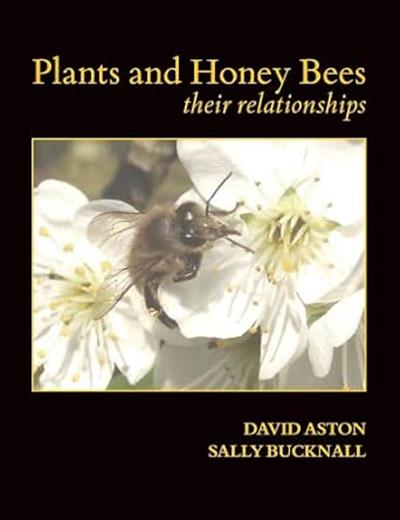
- Publisher : Northern Bee Books


Our customers have not yet submitted a review for this title - click here to be the first to write a review
Description:
The relationship of bees and flowers is a close and interdependent one that has evolved over many millions of years. A good knowledge of this relationship not only helps beekeepers to ensure their honey bee colonies are healthy and productive, but also introduces the beekeeper to the fascinating world of plants, their form and function and the ways in which bees and plants have adapted for mutual benefit.
The majority of flowering plants need to be cross-fertilised to ensure genetic variation, and this involves the transfer of pollen (male gametes) from one plant to the receptive female sexual organs of another plant to fertilise the female gametes. Some plants, however, are capable of self-fertilisation and do not need the transfer of pollen between individual plants.
The evolutionary development of flowers enabled many plants to utilise insects and other vectors such as birds, moths and bats as agents to facilitate pollination. In order to attract these animals, the flowers are usually brightly coloured, scented and offer pollen or nectar as a food reward for the visit. In some cases, the flowers have become indispensable to the insects. The result is that the evolution of plants and insects has become closely linked, with flowers becoming adapted to maximise the chances of pollen transfer by the insect. The process is thus more reliable than wind pollination, and insect-pollinated plants do not need to produce as much pollen as wind-pollinated plants.
Historically, biology, the science of life and living organisms, has been subdivided into botany, the study of plant life, and zoology, the study of animal life. It is now considered that this simple classification is no longer appropriate and that viruses, bacteria, blue-green algae and possibly fungi should not be included in the plant kingdom as they once were; they are now established in their own kingdoms.
You may also like...

Butterflies of Britain and Western Europe and their Caterpillars: An
Moussus, J.-P.
Price £25.99
(Save £9.01)


Butterflies of the Western Palaearctic Vol. 1: Hesperiidae, Papilionidae,
Tshikolovets, V.V.
Price £136.00


The Butterfly Thief: Adventure, Fraud, Scotland Yard, and Australia’s Greatest
Marsh, Walter
Price £16.99