





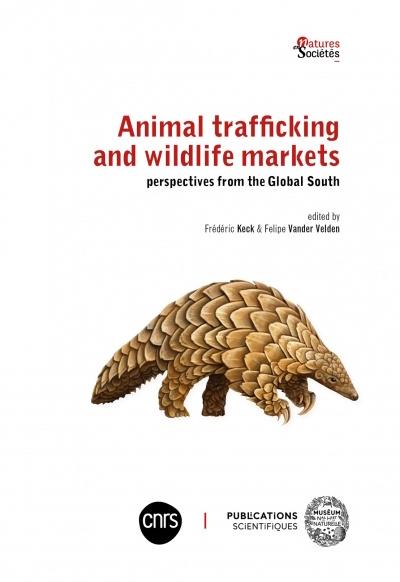
Animal trafficking and wildlife markets: perspectives from the Global South
- Series : Natures en societes
Volume: 12 - Publisher : MNHN / CNRS
- Illustrations : 57 illus


Our customers have not yet submitted a review for this title - click here to be the first to write a review
Description:
Text English. This book examines cases of animal markets and wildlife trafficking in Asia, Africa and South America, often described as the ‘global South’, leaving aside Europe and North America, defined by contrast as the ‘global North’. One of the goals of this book is to ask why, beyond global norms of biodiversity protection, the circulation of animals and their body parts has appeared as scandalous, while similar movements in the global North are presented as conforming to these norms. The notion of trafficking, which originally meant the ordinary movement of goods such as artworks or vehicles, has come to mean illegal trade because of the modern attempt to regulate trade within a framework guided by a modern conception that ‘purifies’ objects and subjects, nature and culture. But relationships between humans and animals are much richer and more ambivalent than a simple division between the legal and the illegal supposes, and the ethnographic investigation by the authors gathered here of the countless movements of animals through human hands demonstrates these various meanings of ‘animal trafficking’. This book gathers surveys based on ethnographic fieldwork and historical archives to examine recent transformations of wildlife markets across the globe, such as the use of the Internet and social media to circulate images of animals, their body parts and the markets where they are sold. This book is a contribution to the anthropology of wildlife trafficking through the ethnographic investigation of animal markets. By this term, we mean sites where humans confront animals as living beings and commodities at the same time, therefore generating tensions by capturing and sometimes killing animals to transform them into objects of value.
You may also like...


An Illustrated Book of Peat: The Life and Deaths of Bogs: A New Synthesis. Vol.
Fenton, J.H.C.
Price £44.95


Mini-Forest Revolution: Using the Miyawaki Method to Rapidly Rewild the World
Lewis, H.
Price £16.99